
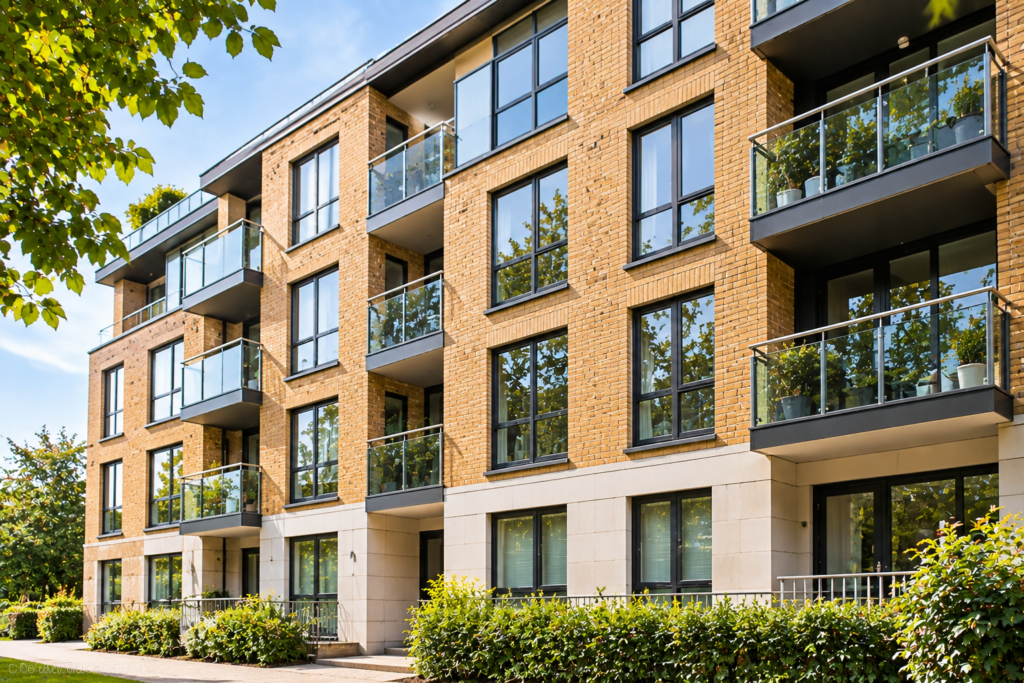
Can You Get a Bridging Loan on a Leasehold Property?
Buying a leasehold property with a short lease? Need to complete a purchase before a lease extension can be arranged? Bridging finance may provide a short-term funding solution when a conventional mortgage isn’t immediately available.
Leasehold properties are common throughout England and Wales, particularly flats, apartments and converted buildings. Most can be financed using conventional mortgages, provided they meet the lender’s criteria.
However, problems can arise when a lease has relatively few years remaining, contains terms that lenders find unacceptable or requires extending before the property can be refinanced.
These situations can make purchasing, selling or refinancing a leasehold property more complicated.
At GPS Financial, we help property investors, landlords and homeowners explore specialist finance options, including bridging loans for leasehold properties.
In this guide, we’ll explain how bridging finance works for leasehold properties, what lenders consider and when short-term borrowing may be appropriate.
Can You Get a Bridging Loan on a Leasehold Property?
Yes. Bridging finance can be available for leasehold properties, including flats, apartments and properties with shorter remaining lease terms.
However, the lender will assess the lease carefully before agreeing to lend.
The number of years remaining is important, but it isn’t the only consideration.
A lender may also review:
-
The property’s current market value.
-
The remaining lease term.
-
Ground rent provisions.
-
Service charges and any arrears.
-
Restrictions or unusual clauses within the lease.
-
The condition and construction of the building.
-
The proposed loan amount.
-
The intended repayment strategy.
-
Whether a lease extension is required or achievable.
Some specialist lenders may consider properties that conventional mortgage lenders would decline.
However, this doesn’t mean every leasehold property will be acceptable.
If the lease contains significant legal problems or the lender cannot establish suitable security, finance may still be unavailable.
What Is a Leasehold Property?
When you purchase a leasehold property, you acquire the right to occupy or use it for a specified period under the terms of a lease.
You don’t usually own the land outright.
The freeholder owns the freehold interest, while the leaseholder holds the leasehold interest.
Leasehold ownership is particularly common with flats, where the building and communal areas need to be managed collectively.
Depending on the lease, the property owner may be responsible for:
-
Ground rent, where payable.
-
Service charges.
-
Contributions towards building maintenance.
-
Buildings insurance contributions.
-
Compliance with restrictions contained in the lease.
The lease also specifies how long the leasehold interest lasts.
As the remaining term reduces, the property can become more difficult to mortgage or sell.
This is where specialist property finance may become relevant.
Why Are Short-Lease Properties Difficult to Mortgage?
Conventional mortgage lenders generally have minimum lease-term requirements.
These vary between lenders and may depend on how many years remain at the beginning and end of the proposed mortgage term.
For example, a lender might require a specified number of years remaining beyond the mortgage repayment date.
A property with 65 years remaining on its lease may therefore be unacceptable to some conventional mortgage lenders, even if the building itself is in excellent condition.
Short leases can also affect the property’s market value.
As the lease term decreases, extending it may become more expensive, particularly under valuation rules applicable to the property.
Prospective buyers may also find it harder to obtain mortgage finance.
This can create a difficult situation.
The property may be perfectly habitable, but the remaining lease term prevents the buyer from arranging a suitable conventional mortgage.
A specialist bridging lender may be prepared to consider the property while a lease extension is arranged.
This is one example of the circumstances covered in our article Can You Get a Bridging Loan on an Unmortgageable Property?.
Can You Get Bridging Finance on a Property With a Short Lease?
Potentially, yes.
Some bridging lenders will consider properties with shorter leases than conventional mortgage lenders are willing to accept.
However, their criteria vary significantly.
A lender may consider:
-
How many years remain on the lease.
-
Whether the property can be sold in its current condition.
-
Whether a lease extension is already being negotiated.
-
The estimated cost of extending the lease.
-
The property’s value before and after extension.
-
The legal position and the borrower’s rights.
-
The intended repayment strategy.
For example, an investor may find a leasehold flat available at a discounted price because the lease has only 62 years remaining.
The property might otherwise be in good condition.
A conventional buy-to-let mortgage may be difficult to arrange until the lease is extended.
A bridging loan could potentially fund the purchase while the investor works towards extending the lease.
Once the extension is completed, the investor may be able to refinance onto a longer-term mortgage, subject to lender criteria.
The important consideration is whether the lease extension and subsequent refinancing can realistically be completed within the bridging loan term.
Can You Use Bridging Finance to Extend a Lease?
Yes, potentially.
Bridging finance may be considered where a property owner needs short-term funding to pay for a lease extension.
For example, a landlord might own a leasehold flat with an existing mortgage.
The lease is approaching a point where refinancing is becoming increasingly difficult.
Extending the lease could improve the property’s mortgageability and potentially its marketability.
However, the landlord may not have sufficient cash available to fund the premium and associated costs.
A bridging lender might consider releasing equity from the property to help finance the extension.
Depending on the existing mortgage arrangements, this could involve a second charge bridging loan.
Alternatively, the lender might require the existing mortgage to be repaid as part of a first charge bridging arrangement.
Our article First Charge vs Second Charge Bridging Loans: What’s the Difference? explains how these security arrangements work.
You can also explore our second charge bridging finance options.
How Does Bridging Finance Work for a Lease Extension?
The structure depends on whether you’re purchasing the property or already own it.
Purchasing a short-lease property
An investor may use bridging finance to complete the purchase before extending the lease.
The process could involve:
-
Identifying a property with a short lease.
-
Obtaining specialist legal advice about the lease extension.
-
Establishing the likely premium and associated costs.
-
Arranging bridging finance for the purchase.
-
Completing the lease extension.
-
Refinancing onto a longer-term mortgage or selling the property.
-
Repaying the bridging loan.
It’s important to establish the lease extension route before proceeding.
Eligibility, statutory procedures, valuation rules and timescales depend on the law applicable at the time and the property’s circumstances.
A lease extension cannot be assumed to complete within a particular period.
Extending the lease on a property you already own
If you already own the property, bridging finance might be used to release equity towards the extension costs.
The bridging loan could then be repaid through refinancing or another acceptable exit strategy.
However, lenders will assess the existing mortgage, available equity and whether the proposed extension is achievable.
Do You Have to Own a Leasehold Property for Two Years Before Extending the Lease?
No. The previous two-year ownership requirement for qualifying statutory lease extensions was removed on 31 January 2025.
Under the Leasehold and Freehold Reform Act 2024, the previous two-year ownership requirement for qualifying statutory lease extensions was removed on 31 January 2025.
This means eligible leaseholders in England and Wales can generally begin the statutory lease extension process as soon as they become the registered owner.
However, other eligibility requirements still apply, and the wider leasehold reforms are being introduced in stages. The premium, legal process and timescales should therefore be confirmed with a specialist solicitor before committing to a purchase or arranging finance.
The removal of the ownership requirement does not mean every leaseholder has an automatic right to extend their lease or that the process will be straightforward.
For example, some properties, leases and ownership arrangements may fall outside the relevant statutory provisions.
The premium payable, procedure and timescales also need to be considered.
If you’re buying a property specifically to extend the lease, obtain advice from a solicitor experienced in leasehold enfranchisement before committing to the transaction.
This is particularly important where your bridging loan repayment strategy depends on the extension being completed.
Example: Buying a Flat With a Short Lease
Imagine an investor finds a leasehold flat being sold below the price of comparable properties.
The flat is in good condition, but it has only 60 years remaining on its lease.
The investor intends to purchase the property, extend the lease and refinance onto a buy-to-let mortgage.
The estimated figures might look like this:
| Item | Amount |
|---|---|
| Purchase price | £140,000 |
| Estimated lease extension premium | £30,000 |
| Estimated associated legal and professional costs | £5,000 |
| Total purchase and extension budget | £175,000 |
| Estimated property value following extension | £210,000 |
These figures are illustrative only.
A specialist bridging lender may consider financing the purchase, depending on the existing lease, property valuation and proposed exit strategy.
However, the investor would need to establish how the lease extension premium and associated costs will be funded.
The lender may not advance the full amount required.
The estimated value after extending the lease is also not guaranteed.
Before proceeding, the investor should obtain professional advice about the lease extension, the likely premium and the expected timescale.
Any refinancing would remain subject to the longer-term lender’s requirements.
Can You Get Bridging Finance on a Leasehold Flat at Auction?
Potentially.
Short-lease properties frequently appear at auction because they may be difficult to finance through conventional mortgage lenders.
This can create opportunities for experienced investors who understand the risks.
However, auction purchases introduce additional complications.
Traditional auction contracts commonly require a deposit when the hammer falls, with completion taking place within a relatively short contractual period.
The exact deadline depends on the auction conditions.
If a leasehold flat has a short lease or unusual lease provisions, the legal work may be more involved than for a straightforward freehold purchase.
Before bidding, it’s important to:
-
Review the auction legal pack with your solicitor.
-
Confirm the remaining lease term.
-
Investigate ground rent and service charges.
-
Identify any lease restrictions.
-
Establish whether a lease extension is possible.
-
Obtain an estimate of the extension costs.
-
Understand the contractual completion deadline.
-
Investigate bridging finance before committing to the purchase.
Winning an auction doesn’t guarantee that a lender will accept the property as security.
You can find more information in our auction bridging finance guide.
What Leasehold Issues Can Affect a Bridging Loan Application?
A short lease isn’t the only issue that can make a leasehold property difficult to finance.
Ground rent provisions
Some leases contain ground rent provisions that lenders consider unacceptable.
This can include certain escalation clauses or other terms that create legal or financial concerns.
Although ground rent legislation has changed for many new residential leases, existing leases may still contain provisions requiring investigation.
High service charges
Substantial service charges can affect the property’s affordability, rental profitability and marketability.
A lender may want to understand the ongoing costs associated with the property.
Service charge arrears
Outstanding service charges or ground rent may need to be resolved as part of the transaction.
The legal implications will depend on the lease and circumstances.
Major works
A leasehold flat may be subject to planned building works, such as roof replacement, external repairs or communal improvements.
Leaseholders can sometimes face substantial contributions towards these costs.
This should be investigated before purchasing.
Building safety concerns
Some apartment buildings may require additional documentation relating to fire safety, cladding or other building safety matters.
These issues can affect valuations, insurance, mortgageability and the availability of specialist finance.
A bridging lender may require further reports or decline the property.
Unusual lease restrictions
Certain lease clauses can affect how a property may be used, altered, occupied or transferred.
For investors intending to let the property, restrictions on subletting are particularly important.
A solicitor should review the lease before the purchase proceeds.
Can You Use Another Property as Security?
Yes, potentially.
If a leasehold property has a short lease or other issues affecting its mortgageability, a lender may consider additional security over another property.
For example, an investor might own a residential property with substantial available equity.
They could potentially use that equity to support the purchase of a short-lease flat.
Depending on the existing mortgage arrangements, the bridging lender may consider taking security over more than one property.
This could involve a combination of first and second charges.
Our article Using Additional Property Security to Fund a Purchase explains how this works.
Using additional security can potentially increase the funding options available, but it also places additional assets at risk if the borrowing isn’t repaid.
Can You Buy a Leasehold Property Without a Cash Deposit?
Potentially, although it depends on the overall security available.
Some specialist lenders may consider funding the full purchase price where sufficient additional property security is offered.
For example, an investor may already own another property with substantial equity.
A lender might consider using both properties as security rather than relying solely on the leasehold flat being purchased.
However, funding 100% of the purchase price does not necessarily mean borrowing 100% of the property’s value.
You’ll also need to account for legal fees, valuation costs, purchase taxes where applicable and any lease extension costs.
Our article Can You Get a Bridging Loan Without a Deposit? explains the different ways a purchase might be structured.
You can also explore our 100% LTV bridging loan options.
How Much Does Bridging Finance Cost for a Leasehold Property?
The cost depends on the lender, loan amount, security, term and complexity of the transaction.
Leasehold properties may involve additional legal work, particularly where the lease is short or an extension is required.
Potential costs include:
-
Bridging loan interest.
-
Lender arrangement fees.
-
Property valuation fees.
-
Legal fees.
-
Lease extension premiums.
-
Lease extension valuation and professional fees.
-
Broker fees, where applicable.
-
Exit fees or extension charges, where applicable.
Some lenders allow interest to be retained or rolled up rather than paid monthly.
This can reduce monthly cash flow requirements but increases the amount repayable at the end of the term.
At GPS Financial, our bridging broker fee is capped at £995, and may be waived in certain circumstances.
For a more detailed explanation of borrowing costs, read How Much Does a £200,000 Bridging Loan Actually Cost?.
It’s also important to remember that the cost of extending a lease is separate from the cost of arranging bridging finance.
Both should be included in the overall budget.
How Do You Repay a Bridging Loan on a Leasehold Property?
Bridging finance is intended for short-term borrowing.
Before approving the loan, the lender will want to understand how it will be repaid.
For leasehold properties, common exit strategies include:
Refinancing after extending the lease
An investor may purchase a short-lease property, extend the lease and refinance onto a conventional mortgage.
For landlords, this might involve refinancing onto a buy-to-let mortgage.
However, the longer-term lender will assess the remaining lease term, property valuation, rental income and other lending criteria.
A lease extension does not guarantee that refinancing will be available.
Selling the property
Some investors may purchase a short-lease property, extend the lease and sell it.
The sale proceeds would then be used to repay the bridging loan.
However, the eventual sale price and timescale cannot be guaranteed.
Repayment from another property sale
A borrower may have another property being sold, with the proceeds intended to repay the bridging facility.
This can also be relevant where bridging finance is being used to complete a purchase before an existing property sells.
Our article Buying a House Before Selling Yours: How Chain Break Bridging Works explains this type of arrangement.
Whatever the intended exit, it must be realistic and achievable within the agreed loan term.
If a lease extension or refinancing takes longer than expected, additional borrowing costs may arise.
We’ve explained the potential consequences in What Happens When a Bridging Loan Reaches Its Repayment Date?.
What Are the Risks of Bridging Finance for Leasehold Properties?
Although bridging finance may offer flexibility, there are important risks to consider.
Lease extensions can take longer than expected
The statutory or negotiated lease extension process can involve valuations, legal negotiations and procedural requirements.
Completion may take longer than originally anticipated.
Lease extension costs may increase
The premium and associated professional costs may differ from initial estimates.
This can affect the overall profitability of the transaction.
Refinancing isn’t guaranteed
Even after extending the lease, a conventional lender may identify other issues affecting the property’s mortgageability.
Leasehold liabilities may be higher than expected
Ground rent, service charges, major works contributions and other lease obligations can affect the total cost of ownership.
The property’s value may change
An anticipated increase in value following a lease extension is not guaranteed.
Your property could be repossessed
Bridging finance is secured borrowing.
If the loan isn’t repaid in accordance with its terms, the lender may take enforcement action, including repossession.
Where additional properties are used as security, those properties may also be at risk.
The most important consideration is whether the proposed lease extension, sale or refinance provides a credible repayment strategy.
How GPS Financial Can Help
Leasehold property finance can become complicated when the remaining lease term is short or the lease contains provisions that conventional mortgage lenders find unacceptable.
At GPS Financial, we work with property investors, landlords, developers and homeowners looking for specialist property finance solutions.
With access to over 200 lenders across our wider lending panel, we can explore bridging finance options for transactions that may not meet conventional mortgage lending criteria.
We can help assess:
-
Bridging loans for leasehold flats and apartments.
-
Properties with short remaining leases.
-
Funding associated with lease extensions.
-
Auction purchases involving leasehold properties.
-
First and second charge bridging loans.
-
Additional property security arrangements.
-
Short-term funding ahead of refinancing or sale.
Not every leasehold property will be suitable for bridging finance.
However, understanding the lease terms, obtaining appropriate legal advice and approaching suitable lenders early can help establish what options may be available.
We’ll assess the property, existing borrowing, funding requirements and intended exit strategy before exploring suitable lending arrangements.
Frequently Asked Questions About Leasehold Bridging Finance
Can you get a bridging loan on a leasehold flat?
Yes, potentially. Many specialist bridging lenders consider leasehold flats, subject to the lease terms, property valuation, security and repayment strategy.
Can you get bridging finance on a property with a 60-year lease?
Some lenders may consider a property with 60 years remaining, but this depends on their criteria, the property and the proposed exit strategy. A lease extension may be necessary before refinancing.
Can bridging finance pay for a lease extension?
Potentially. A bridging loan may be used to release equity or provide short-term funding towards lease extension costs, subject to lender requirements.
Can I buy a short-lease property and extend the lease immediately?
Eligible flat owners in England and Wales generally no longer need to satisfy the previous two-year ownership requirement for a statutory lease extension. However, other eligibility rules and legal requirements still apply.
Do bridging lenders check ground rent and service charges?
Yes. Lenders and their solicitors may review ground rent, service charges, arrears and other lease provisions to establish whether the property is acceptable security.
Can I get a bridging loan on a leasehold flat at auction?
Potentially. Bridging finance may be available for auction purchases, but the lease and legal pack should be reviewed before bidding.
Can I refinance onto a buy-to-let mortgage after extending the lease?
Potentially. Refinancing depends on the property meeting the new lender’s criteria, including lease length, valuation, rental income and borrower circumstances.
What happens if my lease extension takes longer than my bridging loan term?
You may face additional interest and charges. A lender might consider an extension, but this isn’t guaranteed. The repayment strategy should account for potential delays.
Need Bridging Finance for a Leasehold Property?
Whether you’re buying a flat with a short lease, arranging a lease extension or purchasing a leasehold property at auction, specialist bridging finance may provide a solution.
At GPS Financial, we’ll assess your property, lease terms, available security and intended repayment strategy before exploring suitable lenders.
We’ll also explain the costs, risks and available options so you can make an informed decision.
Call GPS Financial on 029 2267 7707 or contact our specialist bridging finance team to discuss your requirements.