
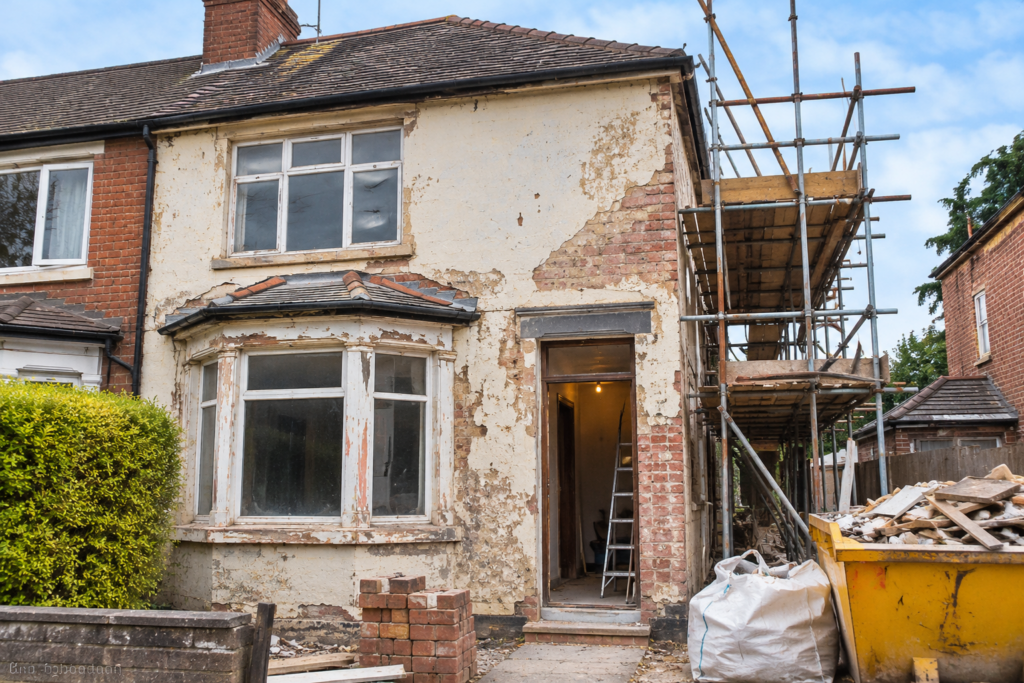
Can You Get a Bridging Loan to Renovate a Property?
Found a property with potential, but it needs work before you can move in, rent it out or sell it? A bridging loan could help you purchase and renovate it, even where a conventional mortgage isn’t currently an option.
Renovation projects can present excellent opportunities for property investors, landlords and developers. However, securing finance isn’t always straightforward, particularly when the property needs significant repairs or is considered unsuitable for a standard mortgage.
This is where a bridging loan for property renovation can help.
At GPS Financial, we arrange bridging finance for refurbishment across the UK, helping borrowers purchase, improve and refinance properties.
But what types of renovation can you finance, how much can you borrow and can the loan cover the building work as well as the purchase?
What Is a Bridging Loan for Property Renovation?
A bridging loan is a short-term loan secured against property, typically used when finance is needed for a limited period.
Unlike a conventional mortgage, which is generally designed for longer-term borrowing, bridging finance can provide temporary funding while a property is being improved.
For example, you might purchase a property requiring a new kitchen, bathroom, electrical work or substantial structural repairs.
Once the renovation is complete, you could repay the bridging loan by selling the property or refinancing onto a longer-term mortgage.
Some specialist lenders can also provide funding towards the refurbishment costs, rather than just the property purchase.
This makes bridging loans particularly useful for investors purchasing properties that need work before they can generate rental income or qualify for conventional mortgage finance.
Can You Use a Bridging Loan to Buy and Renovate a House?
Yes. Depending on the lender and the proposed works, a bridging loan may be used to finance both the purchase of a property and its renovation.
This is commonly known as a refurbishment bridging loan.
There are two main approaches.
Purchase finance only: The lender provides funding towards the property purchase, while you cover the refurbishment costs yourself.
Purchase and refurbishment finance: The lender provides an initial advance towards the purchase, together with an agreed facility to help fund the building works.
The second option can be particularly useful for larger projects where you don’t want to commit all your available cash to the renovation.
However, refurbishment funding isn’t always released upfront. For more substantial projects, lenders may release funds in stages as work progresses.
The right arrangement depends on the property’s condition, the cost and complexity of the work, and your intended repayment strategy.
What’s the Difference Between Light and Heavy Refurbishment?
One of the first things a lender will consider is whether your project involves light or heavy refurbishment.
This distinction can affect the type of finance available, the lender’s criteria and how funds are released.
Light refurbishment bridging loans
Light refurbishment generally involves cosmetic improvements or relatively straightforward repairs.
Examples include:
-
Replacing kitchens and bathrooms.
-
Painting, decorating and plastering.
-
Installing new flooring.
-
Replacing internal doors and fittings.
-
Updating electrical or plumbing installations.
-
General property improvements that don’t involve major structural alterations.
These projects are often quicker to complete and may be considered lower risk by lenders.
For example, a landlord might purchase a tired rental property, replace the kitchen and bathroom, redecorate throughout and then refinance onto a buy-to-let mortgage.
Some lenders offer relatively straightforward bridging products for this type of work.
Heavy refurbishment bridging loans
Heavy refurbishment involves more extensive or complicated building work.
Examples include:
-
Structural alterations.
-
Major extensions.
-
Loft conversions involving significant structural work.
-
Reconfiguring a property’s internal layout.
-
Converting a house into flats.
-
Substantial renovation requiring planning permission or building regulations approval.
These projects may require specialist refurbishment or development finance rather than a standard bridging loan.
Lenders may request detailed building costs, a schedule of works, planning information and evidence of the borrower’s experience.
For larger projects, funding may be released in stages following inspections.
It’s important to establish how a lender classifies your proposed works before applying. One lender’s definition of light refurbishment may differ from another’s.
Can You Get a Bridging Loan on a Property That Needs Major Repairs?
Yes, potentially.
Some of the most attractive renovation opportunities involve properties that conventional mortgage lenders won’t initially accept.
A property might be considered unmortgageable because it has:
-
No functioning kitchen or bathroom.
-
Significant damp or water damage.
-
Structural defects.
-
Unsafe electrical installations.
-
Serious roof problems.
-
Extensive disrepair.
-
Other issues affecting its suitability as mortgage security.
Specialist bridging lenders may consider these properties where there is sufficient security and a realistic plan to complete the necessary work.
For example, an investor might purchase a property that has been empty for several years and requires a complete internal refurbishment.
The property may not qualify for a buy-to-let mortgage immediately, but a bridging loan could potentially fund the purchase while the necessary improvements are completed.
Once the property meets mortgage lending standards, refinancing may become possible.
We’ve explored this in our article Can You Get a Bridging Loan on an Unmortgageable Property?
How Much Can You Borrow for a Property Renovation?
The amount available depends on several factors, including:
-
The property’s purchase price and current value.
-
The extent of the proposed renovation.
-
The estimated cost of the works.
-
The property’s expected value once completed.
-
Your experience and financial circumstances.
-
The security available.
-
Your intended exit strategy.
For straightforward purchases, some bridging lenders may consider lending around 70% to 75% of the property’s value, although higher or lower amounts may be available depending on the product and circumstances.
Specialist refurbishment products may allow greater leverage or provide separate funding towards the works.
Example: Buying and Renovating an Investment Property
Imagine you’ve found a property with the following figures:
| Amount | |
|---|---|
| Purchase price | £180,000 |
| Estimated renovation costs | £40,000 |
| Total purchase and works budget | £220,000 |
| Expected value after renovation | £280,000 |
A lender might consider an initial advance towards the £180,000 purchase, together with a separate facility towards the £40,000 refurbishment budget.
However, the amount available will depend on the lender’s criteria, valuation and assessment of the completed project.
You’ll also need to account for purchase costs, interest, fees and any contingency required.
The expected £280,000 value is not guaranteed, and the lender may assess both the current value and the projected value after the works.
This is why realistic valuations and renovation budgets are so important.
Can a Bridging Loan Cover 100% of Renovation Costs?
Potentially, yes.
Some specialist refurbishment lenders may consider funding up to 100% of eligible building costs, subject to the overall loan structure and security available.
However, this doesn’t necessarily mean they’ll fund 100% of the purchase price and every associated cost.
For example, a lender might provide an initial advance towards the purchase and then reimburse eligible refurbishment costs in stages.
You may therefore need sufficient cash available to begin the work before the first refurbishment payment is released.
In other circumstances, additional property security could help support a larger facility.
Our articles Using Additional Property Security to Fund a Purchase and Can You Get a Bridging Loan Without a Deposit? explain how existing property equity may help reduce the cash contribution required.
You can also explore our 100% LTV bridging loan options.
How Are Refurbishment Funds Released?
This is one of the most important practical considerations when arranging finance for a renovation project.
Not all lenders release the full refurbishment budget at the start of the loan.
For larger projects, funds may be released through a staged drawdown facility.
A typical arrangement could work as follows:
-
Initial advance: The lender releases an agreed amount towards the property purchase.
-
Work begins: You fund the initial stage of the renovation using your own available cash.
-
Progress inspection: The lender or its appointed monitoring surveyor checks that the agreed work has been completed.
-
Drawdown: The lender releases an agreed amount against the completed works, subject to its conditions.
-
Further stages: The process continues until the refurbishment is complete or the facility has been fully drawn.
Some lenders use different arrangements, including advance funding for certain works, so it’s important to understand the precise terms.
A common mistake is assuming that an agreed refurbishment facility means all the money will be available immediately.
If you don’t have enough cash to start the project, that could cause serious problems.
At GPS Financial, we’ll help you understand the funding structure before you commit to the purchase.
What Documents Do You Need for a Renovation Bridging Loan?
The documentation required will depend on the lender and complexity of the project.
For a straightforward refurbishment, lenders may ask for:
-
Details of the property and purchase price.
-
Proof of identity and address.
-
Details of existing borrowing.
-
A schedule of proposed works.
-
Estimated renovation costs.
-
Information about the intended repayment strategy.
For heavier refurbishment projects, additional information may be required.
This could include contractor quotations, planning permission, building regulations information, a project programme, contingency budget and evidence of previous development experience.
Having this information prepared early can help avoid unnecessary delays.
How Long Can You Have a Renovation Bridging Loan?
Bridging loans are intended for short-term borrowing.
Many refurbishment facilities are arranged for periods of around 6 to 12 months, although shorter and longer terms may be available depending on the lender and project.
The appropriate term should reflect the time needed to:
-
Complete the property purchase.
-
Carry out the renovation.
-
Obtain any necessary approvals or certificates.
-
Market the property or arrange refinancing.
-
Repay the bridging loan.
For example, if you expect the renovation to take four months, arranging a loan with only four months to repay could leave very little room for unexpected delays.
Building projects don’t always run to schedule.
Contractors can be delayed, materials may take longer to arrive and unexpected repairs can increase the scope of the work.
It’s therefore important to allow a realistic period for both the refurbishment and the proposed exit.
Our article What Happens When a Bridging Loan Reaches Its Repayment Date? explains why planning ahead matters.
How Do You Repay a Bridging Loan After Renovation?
Before a lender agrees to provide refurbishment finance, they’ll want to understand how you intend to repay it.
This is known as your exit strategy.
There are two common approaches.
1. Refinancing onto a buy-to-let mortgage
If you’re renovating a property to rent out, you may plan to refinance once the work is complete.
For example, an investor might purchase a property requiring significant repairs, complete the refurbishment and then arrange a buy-to-let mortgage.
The new mortgage proceeds would be used to repay the bridging loan.
However, refinancing depends on the property’s completed condition, valuation, rental income, borrower circumstances and the mortgage lender’s criteria.
Some lenders also impose minimum ownership periods or other restrictions on recently purchased properties.
It’s therefore important to assess the likely refinancing options before taking out the bridging loan.
2. Selling the renovated property
Some investors purchase properties specifically to renovate and sell.
This is often referred to as property flipping.
The aim is to improve the property and sell it for enough to repay the borrowing, cover the project costs and potentially generate a profit.
However, the eventual sale price isn’t guaranteed.
You also need to account for selling costs, tax implications, interest and the possibility that the property takes longer to sell than expected.
A realistic exit strategy should include a contingency plan if the sale or refinancing doesn’t happen on schedule.
How Much Does a Bridging Loan for Renovation Cost?
The cost of refurbishment bridging finance depends on the lender, amount borrowed, property type, project complexity and loan term.
Typical costs can include:
-
Monthly interest.
-
Lender arrangement fees.
-
Property valuation fees.
-
Legal fees.
-
Monitoring surveyor fees for staged refurbishment funding.
-
Broker fees, where applicable.
-
Exit fees or early repayment charges, where applicable.
Some lenders allow interest to be retained or rolled up rather than paid monthly.
However, this increases the amount that must ultimately be repaid and can affect the net funds available.
At GPS Financial, our bridging broker fee is capped at £995, and in some circumstances we may waive it.
For a practical breakdown of bridging finance costs, read our article How Much Does a £200,000 Bridging Loan Actually Cost?
You can also use our bridging loan calculator for an initial illustration.
What Are the Risks of Using Bridging Finance for Renovation?
Refurbishment projects can be rewarding, but they also involve risks.
These are particularly important when borrowing money against property.
Renovation costs could increase
Unexpected structural problems, rising material costs or additional work can push a project over budget.
A contingency fund is important, particularly for older properties.
The work could take longer than expected
Delays involving contractors, planning matters or building inspections can affect your repayment timeline.
The property may be worth less than expected
An anticipated increase in value isn’t guaranteed.
If the completed property is valued below expectations, refinancing may not release enough money to repay the bridging loan.
Refurbishment funding may be conditional
Where funds are released in stages, you may need to complete and pay for work before receiving the next drawdown.
Your property is at risk
Bridging loans are secured against property.
If you cannot repay the borrowing, the lender may take enforcement action, including repossession.
Where additional properties are offered as security, those assets may also be at risk.
The key is to assess the entire project, not just whether the initial purchase can be funded.
How GPS Financial Can Help Finance Your Renovation Project
At GPS Financial, we work with property investors, landlords and developers who need funding for projects that don’t always fit conventional mortgage lending criteria.
Whether you’re buying a property that needs a new kitchen and bathroom or undertaking a more substantial refurbishment, we can explore suitable funding options.
With whole-of-market access and a panel of over 200 lenders across our wider mortgage and specialist finance services, we can help identify lenders whose criteria match your project.
We can assist with:
-
Light refurbishment bridging loans.
-
Heavy refurbishment finance.
-
Purchasing properties requiring substantial repairs.
-
Finance towards renovation and building costs.
-
Auction purchases.
-
Additional property security.
-
Buy-to-let refinancing after refurbishment.
-
Specialist funding for more complex property projects.
We know that refurbishment projects involve more than simply arranging a loan.
There are valuations, building schedules, contractors, solicitors and sometimes staged funding arrangements to coordinate.
Our approach is to keep things clear and straightforward, helping you understand the funding structure, explaining your options and maintaining regular communication throughout the process.
Most importantly, we’ll assess your intended exit strategy from the outset so you understand how the borrowing is expected to be repaid.
Frequently Asked Questions About Renovation Bridging Loans
Can I get a bridging loan to renovate a house I already own?
Potentially, yes. Some lenders will consider a bridging loan secured against an existing property to fund refurbishment works, provided there is sufficient equity and an acceptable repayment strategy.
Can I use bridging finance for a new kitchen and bathroom?
Yes. Replacing kitchens and bathrooms is generally considered light refurbishment, although the lender will assess the full scope of the proposed works.
Can a bridging loan cover structural repairs?
Potentially. Specialist lenders may consider structural repairs, although extensive works could require heavy refurbishment or development finance.
Can I get a bridging loan for a property without a kitchen?
Some specialist bridging lenders will consider properties that conventional mortgage lenders may regard as unsuitable because they lack essential facilities. Approval depends on the property, security and proposed works.
Do I need planning permission before applying?
Not necessarily. The requirements depend on the nature of the proposed works and the lender. Projects requiring planning permission may need additional documentation or approvals before funds are released.
Can I refinance immediately after renovating?
Possibly, but it depends on the new mortgage lender’s criteria. Some lenders have minimum ownership periods, valuation requirements or restrictions on recently refurbished properties.
Can first-time property investors get refurbishment bridging finance?
Potentially, yes. Some lenders consider first-time investors, particularly for straightforward projects. More complex structural work may require evidence of relevant experience or professional support.
Planning a Property Renovation? Let’s Talk Finance.
Whether you’ve found a tired property with potential or you’re planning a substantial renovation, the right finance can make a significant difference to your project.
At GPS Financial, we’ll look at the property, the proposed works, your available funds and how you intend to repay the loan before exploring suitable options.
We’ll also explain how much cash you may need upfront, whether refurbishment costs can be funded and what happens when the work is complete.
Call us on 029 2267 7707 or contact GPS Financial to discuss your renovation project.