
Can You Get a Bridging Loan on an Unmortgageable Property?
Yes, you can get a bridging loan on an unmortgageable property. In fact, financing properties that traditional mortgage lenders won’t consider is one of the main reasons bridging finance exists.
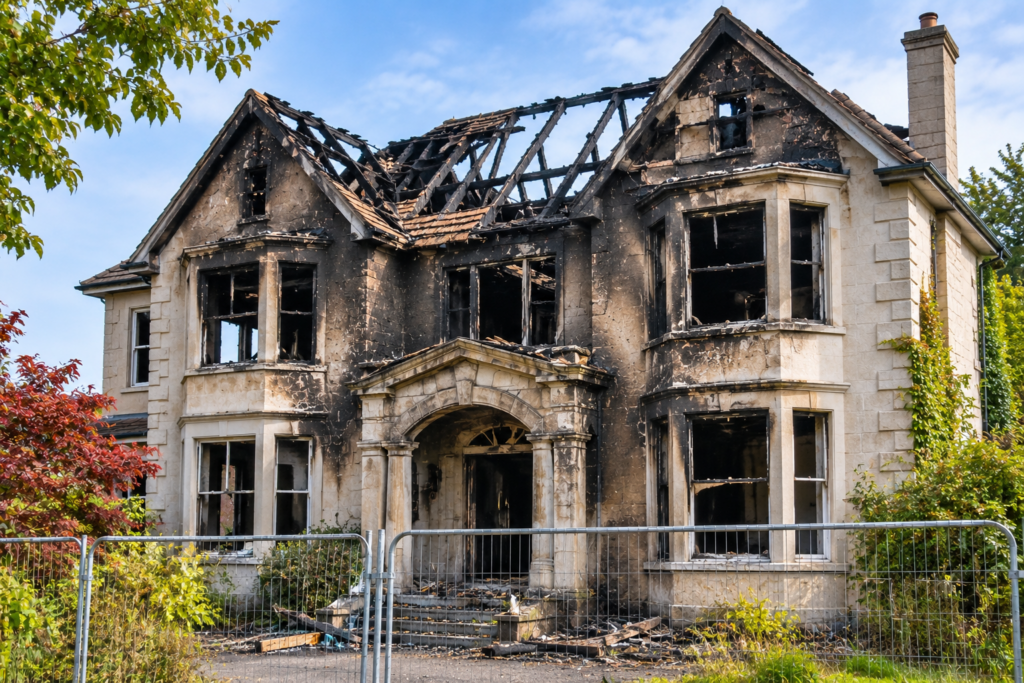
Whether you’re buying a fire-damaged house, a derelict building, a property without a functioning kitchen or bathroom, or something requiring substantial structural repairs, specialist bridging lenders may still be willing to finance the purchase.
At GPS Financial, we arrange bridging finance for property investors, developers and buyers across the UK, including properties that fall outside conventional mortgage lending criteria.
And sometimes, the properties that banks won’t touch offer the greatest potential.
What Makes a Property Unmortgageable?
A property is generally considered unmortgageable when its condition, construction or legal circumstances mean it doesn’t meet a lender’s requirements for a standard mortgage.
This doesn’t necessarily mean the property is worthless or beyond repair. It simply means conventional mortgage finance may not be available in its current condition.
Common examples include:
-
Fire-damaged properties: Homes with significant smoke, fire or structural damage.
-
Properties without kitchens or bathrooms: Buildings lacking essential facilities required by many residential mortgage lenders.
-
Derelict or abandoned buildings: Properties that have been empty for years and require extensive renovation.
-
Structural problems: Subsidence, damaged foundations, unstable walls or significant roof defects.
-
Properties with damp or water damage: Serious flooding, timber decay or extensive moisture-related deterioration.
-
Non-standard construction: Properties built using materials or methods that some mainstream lenders won’t accept.
-
Properties requiring major refurbishment: Buildings that need substantial works before they can be occupied or let.
Some properties may also be difficult to mortgage because of short leases, title defects or planning issues.
Importantly, being unmortgageable with one lender doesn’t mean every lender will reject the property.
How Does a Bridging Loan Work on an Unmortgageable Property?
A bridging loan is a short-term loan secured against property, typically used to finance a purchase or project before longer-term funding becomes available.
Unlike conventional mortgage lenders, specialist bridging lenders can consider properties in poor condition, including those requiring substantial renovation.
They’ll typically assess:
-
The property’s current value and condition.
-
The purchase price and amount you want to borrow.
-
The extent and cost of any required works.
-
Your experience with similar projects, where relevant.
-
The property’s potential value after refurbishment.
-
Your proposed exit strategy and how you’ll repay the loan.
For example, you might purchase a fire-damaged detached property at a significant discount, use bridging finance to secure the purchase, undertake the necessary repairs and then refinance onto a conventional mortgage once the property meets lending requirements.
Alternatively, you could renovate the property and sell it, using the sale proceeds to repay the bridging loan.
The important point is that the property doesn’t necessarily need to be mortgageable today, provided the lender is satisfied with the security, the proposed works and the repayment strategy.
Can You Get a Bridging Loan on a Fire-Damaged House?
Yes. Specialist bridging lenders may consider fire-damaged properties, even where the damage is substantial.
The level of damage will influence which lenders are suitable and how much they’re prepared to advance.
A property with superficial smoke damage presents a very different lending proposition from one with a collapsed roof, extensive structural damage or an unsafe interior.
For heavily damaged properties, lenders may require additional information, including structural reports, detailed refurbishment costs and evidence of the property’s current value.
In more complex cases, additional property security may help support the application.
This is where working with an experienced bridging loan broker becomes particularly valuable. Rather than approaching lenders who won’t consider the property, we can identify those whose criteria are suited to the project.
Can Bridging Finance Cover the Refurbishment Costs Too?
Potentially, yes.
Some bridging lenders will finance the property purchase and provide additional funding towards refurbishment works.
The type of finance required will depend on the scale of the project.
Light refurbishment generally includes straightforward improvements such as replacing kitchens, bathrooms, flooring and internal finishes.
Heavy refurbishment can involve structural alterations, major roof repairs, extensions, substantial fire damage restoration or projects requiring planning permission.
With heavy refurbishment finance, lenders may release funds in stages as works progress, rather than providing the entire refurbishment budget upfront.
It’s important to understand when funds will be released and how much capital you’ll need to contribute yourself.
You can read more about the options on our bridging finance for refurbishment page.
How Much Can You Borrow Against an Unmortgageable Property?
The amount available depends on the property’s value, condition, the proposed works and the lender’s assessment of the overall transaction.
Many bridging lenders offer borrowing of up to approximately 70% to 75% loan-to-value on suitable properties, although severely damaged or higher-risk properties may attract lower limits.
In some circumstances, lenders may offer higher leverage, particularly where additional security is available.
For example, an investor purchasing a property for £400,000 might be able to arrange a bridging loan based on its current value, subject to the lender’s valuation and lending criteria.
If the investor owns another suitable property with available equity, it may be possible to use that additional security to increase the overall borrowing.
Some lenders also assess the property’s projected value after refurbishment, particularly where funding is required for substantial works.
Every property is different, and the right funding structure matters just as much as the headline loan-to-value.
Buying an Unmortgageable Property at Auction
Auction properties frequently attract investors because they offer opportunities to purchase buildings requiring renovation, redevelopment or specialist attention.
However, auction purchases often come with strict completion deadlines.
Traditional mortgage lenders may be unable to finance the property because of its condition, and even where mortgage finance is possible, the application process may take longer than the auction contract allows.
Auction bridging finance can provide a solution, allowing buyers to secure suitable properties within the required timeframe.
If you’re considering bidding on an unmortgageable property, it’s sensible to investigate the finance before the auction.
Winning the bid is only the beginning. You’ll still need to complete the purchase, regardless of whether your finance is ready.
What Happens After You’ve Refurbished the Property?
Before arranging a bridging loan, you need a realistic plan for repaying it. This is known as your exit strategy.
For unmortgageable properties, the two most common exit strategies are:
1. Refinance onto a mortgage
Once the necessary works are complete and the property meets the lender’s requirements, you may be able to refinance onto a residential or buy-to-let mortgage, depending on how the property will be used.
The new mortgage repays the bridging loan, allowing you to retain the property.
2. Sell the refurbished property
Some investors purchase distressed properties specifically to renovate and resell.
In this scenario, the bridging loan is repaid from the sale proceeds.
Whichever route you choose, the exit strategy needs to be realistic from the outset. Refurbishment delays, unexpected costs or changes in property values can all affect your ability to repay on time.
Is Bridging Finance More Expensive Than a Mortgage?
Generally, yes.
Bridging loans are designed for short-term borrowing and usually carry higher interest rates than conventional mortgages.
Depending on the lender and product, costs may include:
-
Monthly interest.
-
Lender arrangement fees.
-
Valuation fees.
-
Legal fees.
-
Broker fees.
-
Exit fees, where applicable.
Interest may be paid monthly, retained or rolled up, depending on the facility.
The total cost will depend on the loan amount, term, property condition and complexity of the transaction.
At GPS Financial, our bridging broker fee is no more than £995 and may be waived in certain circumstances.
The objective isn’t simply to secure funding. It’s to make sure the overall transaction remains financially viable once borrowing costs and refurbishment expenses are taken into account.
Why Use GPS Financial for an Unmortgageable Property?
Not every bridging lender has the same appetite for risk.
Some are comfortable financing properties requiring straightforward renovation, while others specialise in distressed assets, structural defects or extensive refurbishment projects.
At GPS Financial, we’ve been arranging specialist property finance since 2013 and have whole-of-market access to bridging lenders across the UK.
We understand that an unmortgageable property isn’t necessarily a bad investment. Sometimes it’s simply a property that needs the right lender and the right funding structure.
We’ll assess your project, identify suitable lenders, explain the likely costs and help establish a realistic route to repayment.
Whether you’re purchasing a fire-damaged detached house, renovating a derelict property or securing a substantial investment opportunity, we’ll look at what can be achieved rather than simply focusing on why a conventional mortgage isn’t available.
Frequently Asked Questions
Can I get a bridging loan if the property has no roof?
Potentially, yes. Some specialist lenders will consider properties with extensive roof damage or missing roofs. Funding will depend on the property’s value, structural condition, proposed repairs and available security.
Can I get a bridging loan on a property without a kitchen or bathroom?
Yes. This is a common reason investors use bridging finance. A property may be unsuitable for a conventional residential mortgage until essential facilities have been installed.
Do I need planning permission before applying?
Not always. It depends on the proposed works and the lender’s requirements. Projects involving significant structural alterations or changes of use may require planning consent or other approvals.
Can I borrow the full purchase price?
In certain circumstances, 100% of the purchase price may be funded where sufficient additional property security is available. This is not guaranteed and depends on the lender’s assessment.
How quickly can bridging finance be arranged?
Some bridging loans can complete within days, although timescales depend on the property, valuation, legal requirements and lender. Complex properties may require additional reports or due diligence.
Found an Unmortgageable Property? Let’s Talk.
A property that a traditional mortgage lender won’t finance could still be a worthwhile opportunity.
Whether you’re buying a fire-damaged house, tackling a major refurbishment or investing in a property that needs substantial work, specialist bridging finance could help you move forward.
At GPS Financial, we’ll look at the property, your plans and the available funding options to establish what’s realistically achievable.
Call us on 029 2267 7707 or contact our team to discuss your project.